
“Grace, mercy, and peace be with all of you from God our Father and from our Lord and Savior Jesus Christ. Amen.”
Jesus had to ask for a coin. They came at him in the temple courts with a question about money and he didn’t have one in his pocket. That’s not surprising. He did not carry around a lot of money, and even when there was money with the disciples it was usually kept, believe it or not, in the purse of Judas Iscariot, the one who betrayed him. That was a job that Judas signed up for in particular, because he liked to pocket some of that money for himself. Jesus didn’t have a coin in his pocket.
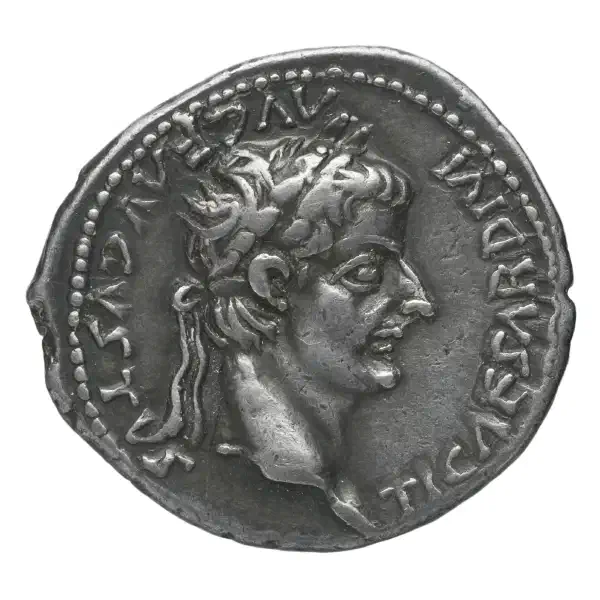
He had to ask them, “Show me the coin. Show me what that coin is.” And here these men who claim to be pious, good, and godly men produce that coin immediately. In the temple, on the temple grounds, they have carried a silver denarius into the area of the temple, and that silver denarius is stamped with a man’s face and also stamped with that man’s claim to be a son of God. They’re asking whether it’s lawful to pay taxes to the emperor, and as they do so the very fact that they are carrying the silver graven image of the emperor in their pocket marks them out as idolaters.
Now we know that the Pharisees intended to trap Jesus. They plotted to entrap him in what he said, but it’s interesting that the groups that are sent are two groups of people that would never get along. You have the disciples of the Pharisees, and you also have the Herodians, and that’s kind of a weird and ambiguous term, but basically the Herodians were not disciples but sort of maybe minions of Herod Antipas. Normally these folks would not get along at all, but here they are plotting to entrap Jesus in what he said.
And they come with lying lips coated with honey. “Teacher, we know that you are sincere and you always teach the truth and you never show partiality to anybody. Come then, tell us, teach us, O rabbi, O teacher of Israel: is it lawful to pay taxes to the emperor or not?”
But look who’s talking. The Pharisees’ disciples would be, properly speaking, the resistance. They were the ones usually standing up to the emperor and to the state and demanding that people pay strict attention to the law and keep that law over their allegiance to Caesar or the local governor. But on the other hand the other group that’s with them are the Herodians. They are collaborators. They are Jews who have given themselves over entirely to Caesar, who have given themselves entirely over to allegiance to the foreign occupiers who are controlling the Holy Land. Two groups that agreed on nothing, but they agree on this: we must get rid of Jesus.
And so they ask him, is it lawful to pay taxes to the emperor or not? And they try to put him on the horns of a dilemma. If he says yes, it is lawful, then he is aligning himself with the Herodians and he’s making himself out to be no better than a collaborator and a traitor. The crowd looking on will see Jesus and say he has betrayed them. But if he says no, well, we know what Rome does to those who challenge the authority of Rome. Rome crucifies rebels, and there is no safe answer. Every road out of that question is closed, and Jesus knows it, and they know it too.
And so instead Jesus pulls a classic Jesus move. He refuses to answer their question and asks them a question in response. “Why are you putting me to the test, you hypocrites?” Here he names the dilemma that they are trying to put him in. He names the trap, and then he insists, “Show me the coin.” They bring forward a denarius, a silver coin.
My late father-in-law was a great collector of coins, and I wish I had one handy, because I could show you this. It would be a small silver coin, and on that small silver coin would be the head of the emperor, Tiberius. And around it would be an inscription, and in Latin it is “Tiberius Caesar divi Augusti filius Augustus.” It means Tiberius Caesar, son of the divine Augustus. A picture and an insistent slogan that says, “This man is son of God.”
A man claiming divinity, his face struck in silver. It’s been carried into the temple courts and handed to the teacher of Israel, the rabbi, Jesus Christ himself, by men acting as if they are insisting on him keeping the law. And so Jesus responds, “Give therefore to the emperor the things that are the emperor’s, and to God the things that are God’s.”
First, it’s worth noting that the word translated “show me the coin,” whose head is on it, should probably be better translated “whose image is on it.” The word there in Greek is icon, an icon being an object of devotion, an image that points you to something else. Whose icon is on this coin, and whose epigraph, whose inscription?
And when he says give to the emperor, it probably would be better said that he should say return, or give back, to the emperor the things that are the emperor’s. The icon of Caesar on a denarius, and the icon of God emblazoned in human flesh. Whose image is stamped on you?
Genesis 1 says, “So God created humankind in his image. In the image of God he created them.” The thing in this room with God’s image on it is not the beautiful altar cross, not the picture of Jesus upon the cross, but the thing which is most closely the icon of God is you. You are the image of the divine creator.
So when he says give to God the things that are God’s, he’s not imposing upon you a second tax, a small portion of what God has given you in order to be returned to God, but he is saying: if you give all of the coin to the emperor, give all of yourself to God.
It’s worth pointing out that in our earlier readings we have other ways in which this question of worship of idols, of idolatry, comes up. In Isaiah 45 it opens up with one of the more uncomfortable sentences in all of the prophets recorded in the Old Testament. It starts off saying, “Thus says the LORD to his anointed, to Cyrus.” Remember, Cyrus is the emperor of Persia.
And actually the word there, anointed, doesn’t just mean anointed. It actually literally is the word Mashiach. It’s Messiah. Here God through the prophet Isaiah is naming Cyrus, who does not know the God of Israel, who has not converted to be a Jew, who has not been a righteous man, who is not an Israelite. He’s not even a monotheist. He doesn’t even just believe in one God. He primarily worships a God called Marduk, but he worships others too.
He’s saying that this guy is his Messiah, his anointed one. Not because he’s a good man, but because God has chosen to use him for God’s purposes. He says, “I call you by your name, I surname you, I give you honors, though you do not know me. I arm you, though you do not know me.” God confers a title of honor on a man who doesn’t know him, and the men in the gospel confer one on God, on Jesus Christ himself, while they lie about it.
What God uses Cyrus for is bringing his people home to the Holy Land, ending the Babylonian exile. And Cyrus becomes God’s chosen instrument, not for being good but for being the man God uses, for being Cyrus, not because he’s a godly ruler but because what he does is useful.
This is what Martin Luther sometimes called the alien work of God. Not space aliens, meep meep, but other, the other work of God. God works primarily through two kingdoms. The right hand kingdom is the kingdom of God, and is the kingdom of God in the sense that the gospel goes out to the whole world calling people to repent and believe in the Jesus Christ who saves them. And then God also rules, as Luther would say, through the left hand kingdom, and the left hand kingdom, or the alien kingdom, or the other kingdom, uses things that are not the gospel to achieve his will. He uses things like the sword, so that Paul says in Romans 13 the magistrate does not bear the sword in vain, he is God’s servant for your good. He uses things like the empire, and even empires which are evil. He uses magistrates and judges, and he even uses the ballot box. But none of these things are the right hand kingdom of God. None of these things can save you.
A few words about the election. Rest assured, not a lick of partisanship. I’m not going to advocate for any issue, no advocacy at all. In fact, if you think I’m doing that in this sermon, you misunderstood me. You should go back and watch later.
There is a mistake we make about voting, though, which I think is common to all people in this room. We look at the ballot and we assume that our task is to figure out which candidate is God’s preferred candidate. The prophet Isaiah tells us here that the anointed one, the Messiah, in his day is a pagan who will not know God and yet will uphold his right hand anyway.
Martin Luther put this reality in this way. I’m paraphrasing, but the quote goes something like this: that I would rather be ruled by a good Turk, by that he meant Muslim, than by a bad Christian, because the work of the left hand kingdom is work that demands prudence. Yes, a wise Turk and a foolish Christian.
So with our ballots, as we come to election day soon, take your vote as a work of the left hand kingdom. You’re doing real work there, you’re doing work for the sake of your neighbor, you are doing work with real consequences for real people. But feel free to vote for whoever you think will get the job done well, including, if necessary, the sorriest and least godly instrument on the ballot, if you think that they will govern justly. Cyrus was not converted. He was useful.
But whoever you vote for, and whoever wins, do not expect that this person will save you, or if the other guy wins, whoever they are, that they will destroy you. We are in God’s hands.
There are two errors, two ditches that we can fall into. One is the crusader’s error: my candidate is God’s anointed, his election is the kingdom coming. It is not, and he is not. But there’s also the other ditch on the other side, the quietist error that says, I’m above politics because politics is filthy, the gospel is a spiritual thing, we must keep these things so separate that one never speaks to the other. But notice here that God names Cyrus. He doesn’t despise the left hand kingdom, he uses it. They’re both the same error, they’re just in direct, opposite directions. One elevates the importance of the state and one minimizes it.
But in all things, Saint Paul reminds us in Philippians 3 that our citizenship is not here but in heaven. And so the difficult thing about what Jesus teaches us today is not, “Give to Caesar what is Caesar’s.” Now I’ll admit that this hits a little differently in April, when you’re busy in the process of writing a check to Caesar and paying the IRS. But the hard part actually is, give to God the things that are God’s, because that’s you and me, and we don’t really want to do it.
Despite our best efforts, what’s really going to happen this week is we will hear this and then we will give ourselves into idolatry yet again. We will struggle against our flesh but we will not perfectly overcome it. You will hand your own comfort over, and hand to your own comfort what belongs to God. You’ll hand to your own side what belongs to God and call it his will. And you will look at the people you’re voting against and find that the coin with Caesar’s face on it is more important to you than your neighbor.
That’s the idolatry that we face in our society, elevating created things to the point of the honor of the Creator. But in spite of that, God will still make use of you. He will still love you and he will still save you in Christ. He will gather you into his community. He will feed you with his gifts. He will preach his word to you, and he will prepare your hearts for heaven, because when Jesus Christ tells us to give to God the things that are God’s, he’s not saying, “Hey, you better buck up and do good.” He’s saying, “Here, I will come and do it for you.”
In the supper, God gives himself to the ones who belong to him. He gives in bread and wine his own body and his own blood, given for you and shed for you. He doesn’t bring you here with Caesar’s coin in your pocket asking for you to pay some small portion of yourself. He sets the table for you, and he feeds you with his own body and blood, so that you might be returning to him again and again and again in love and gratitude for what God has accomplished for you in Jesus Christ.
You see, the coin was never the point. You are. The purpose of God in Jesus Christ is to subdue all idols and cause us to turn once again to the God who made us and in whose image we are formed.
May you know the peace and rest of Christ in this day, and may the peace of God, which surpasses all understanding, keep your hearts and minds strong in Christ Jesus our Lord, to life everlasting. Amen.